
EPDM vs. TPO vs. modified bitumen comes down to how each flat roof is built and sealed. EPDM is a rubber membrane with taped or glued seams, TPO is a usually white membrane with heat-welded seams, and modified bitumen is an asphalt-based roll roofing applied in layers. Each can work well on a Detroit flat roof; the right pick depends on the building, foot traffic, sun exposure and the existing roof.
Flat and low-slope roofs are common on Detroit commercial buildings, garages, additions and many older homes and multi-family buildings. Here’s a plain comparison of the three most common systems to help you have a more useful conversation with a roofer.
Key Takeaways
- EPDM is a thermoset rubber membrane; seams are sealed with adhesives and tape.
- TPO is a thermoplastic membrane; seams are melded together with hot air.
- Modified bitumen is an asphalt membrane with modifiers, applied by torch, adhesive or mechanical fastening.
- Installation quality, flashing details and drainage matter as much as the material you choose.
What Counts as a Flat Roof?
Most “flat” roofs actually have a slight pitch so water can drain. The Cool Roof Rating Council defines low-sloped roofs as those with a rise-to-run ratio of less than 2:12 and notes they’re often found on commercial buildings and multi-family homes (Cool Roof Rating Council). Because water moves slowly on these roofs, membranes and seams have to stay watertight.
What Are EPDM, TPO and Modified Bitumen?
All three are common on low-slope roofs, but they’re made and installed differently.
EPDM Roofing
EPDM (ethylene propylene diene terpolymer) is a flexible rubber membrane. The Cool Roof Rating Council describes it as a thermoset membrane that can’t be applied with heat, so seams are sealed with adhesives and tape. It comes in reinforced and fleece-backed versions.
Good to know about EPDM:
- Stays flexible in cold weather, which suits Michigan winters.
- Usually black, which absorbs heat in summer; white versions and coatings exist.
- Seams and flashing details are the areas to watch over time.
TPO Roofing
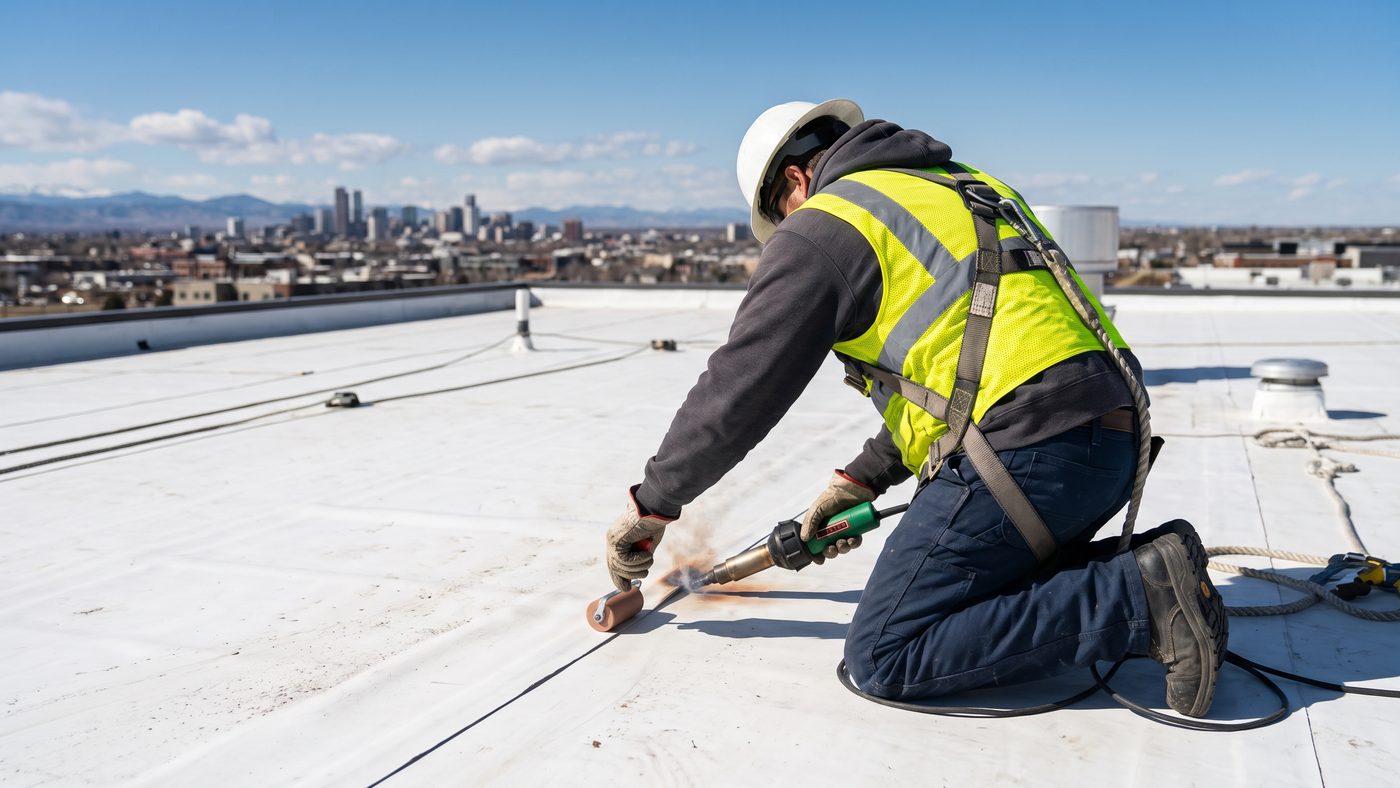
TPO (thermoplastic polyolefin) is a single-ply membrane. Because it’s thermoplastic, the Cool Roof Rating Council explains, its seams can be melded together with hot-air welding. That creates a continuous bond at the seams rather than relying on tape or glue.
Good to know about TPO:
- Usually white or light colored. California’s Cool California program lists white PVC or TPO membranes with solar reflectance of about 0.70 to 0.85 (Cool California).
- Reflective surfaces can help keep a building cooler in summer, which matters most for buildings with air conditioning under the roof.
- Welding takes trained crews and the right equipment.
Modified Bitumen Roofing
Modified bitumen is an asphalt-based roofing that comes in rolls. The Cool Roof Rating Council says it contains modifiers, most commonly APP or SBS, that give the bitumen plastic qualities, and sheets are applied by torch, mechanical attachment or adhesive. It’s often installed in more than one layer, with a granule-surfaced cap sheet on top.
Good to know about modified bitumen:
- A multi-layer system with a tough surface that handles foot traffic well.
- Standard mineral cap sheets are dark; Cool California lists them at about 0.10 to 0.20 solar reflectance, with white coatings raising that to about 0.60 to 0.75.
- Torch-applied installs require careful fire safety practices; cold-applied and self-adhered options exist.
EPDM vs. TPO vs. Modified Bitumen at a Glance
| Feature | EPDM | TPO | Modified bitumen |
|---|---|---|---|
| Material | Thermoset rubber | Thermoplastic polyolefin | Asphalt with APP or SBS modifiers |
| Seams | Adhesive and tape | Hot-air welded | Overlapping layers, torched or adhered |
| Typical color | Black (white available) | White or light | Dark granules (coatings available) |
| Strengths | Flexible in cold | Reflective, welded seams | Durable, multi-layer surface |
| Watch for | Seam and flashing wear | Welding quality | Torch safety, seam laps |
How Long Do Flat Roofs Last?
Lifespan depends on the material, installation, drainage and maintenance. Cool California’s comparison lists single-ply membranes at about 10 to 20 years and modified bitumen at about 10 to 30 years, though local climate and workmanship change real-world results. Ponding water, foot traffic and neglected flashing shorten life for any system, so regular inspections matter.
What do Michigan winters mean for a flat roof?
Snow sits longer on a flat roof than on a pitched one, and meltwater has to find its way to drains, scuppers or gutters. When drains are blocked by leaves or ice, water can pond and refreeze, which stresses seams and flashing. Clearing drains in the fall, checking the roof after big storms and fixing low spots where water collects all help any of these three systems last. If you see water stains inside after a thaw, have the roof checked before the next freeze.
Which Flat Roof Is Best for a Detroit Building?
There isn’t a single best answer, but these questions help narrow it down:
- How much foot traffic? Roofs with HVAC units and frequent service visits benefit from tougher surfaces or walkway pads.
- Is summer heat a concern? Light, reflective membranes or coatings can help.
- What’s there now? The existing roof, insulation and deck condition affect which system fits.
- How does water drain? Any system needs working drains, scuppers or gutters to avoid ponding.
Do I need a permit for a flat roof in Detroit?
Detroit’s Buildings, Safety Engineering and Environmental Department (BSEED) handles building permits. Its building permits page says residential contractors need a Builder’s License and City of Detroit registration, and applications are submitted through the city’s online portal (City of Detroit BSEED). Ask your roofer to confirm which permits your project needs.
How Detroit MI Roofing Company Can Help
Detroit MI Roofing Company works on homes and commercial buildings across Detroit, including flat roofing installation and repair. We can inspect your current roof, explain which systems fit your building and answer your questions.
Frequently Asked Questions
Is TPO better than EPDM?
Neither is better for every building. TPO has welded seams and a reflective surface, while EPDM stays flexible in cold weather and has a long track record. The right choice depends on the building and how it’s used.
Can you install a new flat roof over the old one?
Sometimes, if the existing roof and deck are dry and sound and local code allows it. Wet insulation or damaged decking usually needs to come off first.
What causes most flat roof leaks?
Leaks often start at seams, flashing around walls and penetrations, and areas where water ponds. Regular inspections help catch these early.
Can a flat roof be coated instead of replaced?
A roof coating can extend the life of some roofs that are still in sound condition. It won’t correct wet insulation, failed seams or a damaged deck.
Questions about your flat roof? Call Detroit MI Roofing Company at (313) 710-5621 or reach out online to schedule an inspection.