
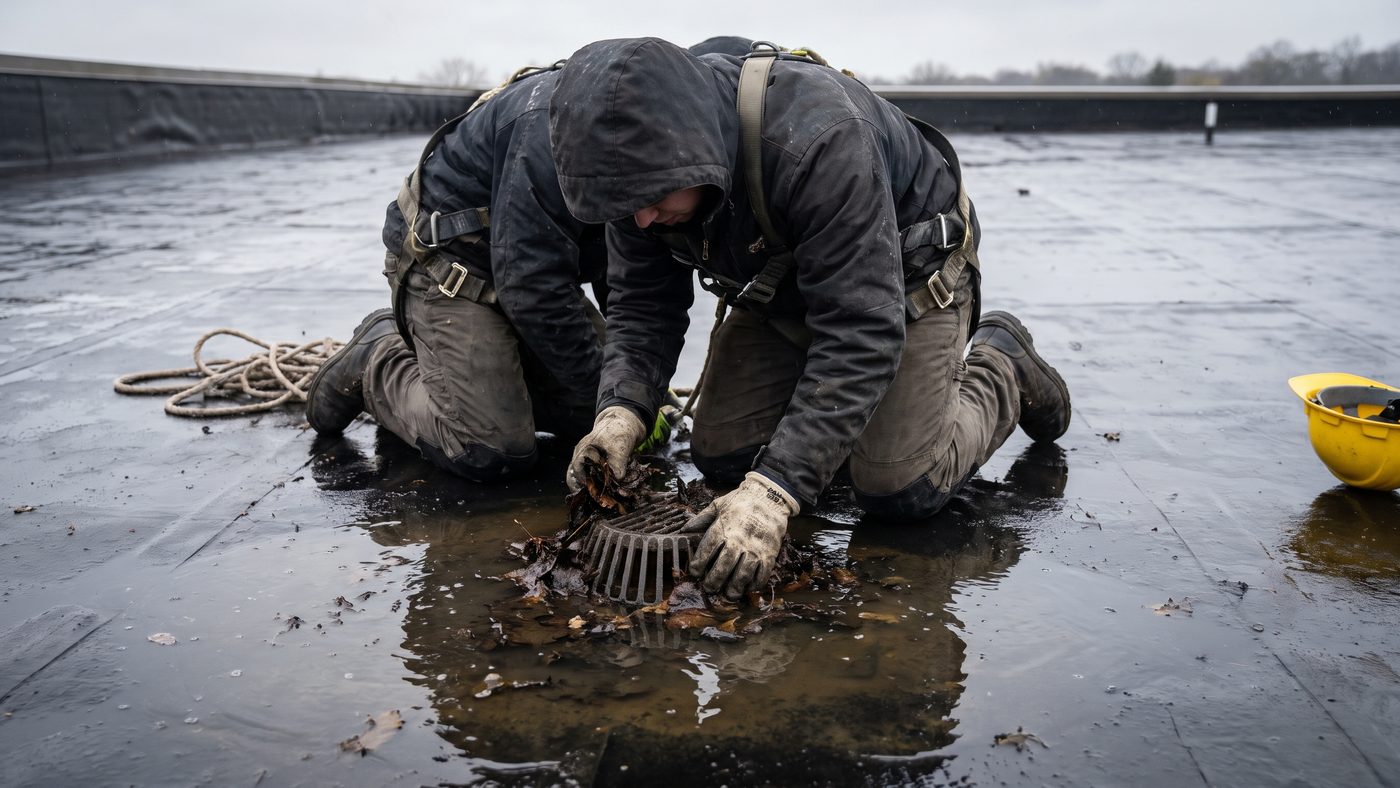
Ponding water on a flat roof becomes a problem when it’s still there 48 hours after the rain stops. Industry groups use that mark to separate normal puddling from true ponding. Longer-standing water adds weight to the deck, wears the membrane and raises the chance of leaks. Puddles that dry within two days usually are fine.
Flat and low-slope roofs are everywhere in Detroit, from commercial buildings and storefronts to garages, additions and older two-flats. If you see water sitting on your roof after a storm or snowmelt, this guide explains what causes it, when it matters and what can be done about it.
Key Takeaways
- Water that stays on a low-slope roof for 48 hours or longer is considered ponding.
- Ponding can lead to deck deflection, membrane damage, plant growth and leaks.
- Common causes include clogged drains, sagging decks and too little slope.
- Options include clearing drains, adding tapered insulation or crickets and repairing low spots.
What Counts as Ponding Water on a Flat Roof?
Ponding water is water that stays on a roof for 48 hours or longer. The Asphalt Roofing Manufacturers Association defines it this way in its technical bulletin on the effects of ponding water on low-slope roof systems, noting it can come from rain, melting snow and ice, or runoff from rooftop equipment.
An article from the National Roofing Contractors Association on roof slope and drainage explains that ponding for short periods is unavoidable and considered acceptable by NRCA and membrane manufacturers, but that ponding in excess of 48 hours can be detrimental to the roof assembly.
Why Is Ponding Water Bad for a Flat Roof?
Ponding water is bad for a flat roof because it adds weight and keeps the roof surface wet far longer than it was designed for. The ARMA bulletin lists several possible effects:
- Deck deflection. Water is heavy. As it collects, the extra load can cause the deck to sag, which lets even more water collect.
- Biological growth. Standing water promotes algae and vegetation that can damage the membrane and clog drains.
- Dirt buildup. When ponds dry, dirt and debris left behind can crack and pull at the membrane surface.
- Ice damage. In winter, ice that forms in ponded areas moves with temperature changes and can scrub the membrane.
- Leaks. If water finds a seam, crack or puncture, a pond above it keeps feeding water into the building.
Detroit’s freeze-thaw cycles make the last two points especially important. A pond that freezes and thaws repeatedly through the winter puts steady stress on the roof.
What Causes Ponding Water on a Flat Roof?
Most ponding comes from drainage problems, structural changes or roof design. Common causes include:
- Clogged roof drains, scuppers or gutters from leaves, debris and nests
- Sagging areas in the deck from age, water damage or heavy loads
- Too little slope toward drains
- Low spots around rooftop units, skylights or curbs that block water flow
- Compressed or wet insulation under the membrane
- Repairs or added layers that changed how water flows
The ARMA bulletin recommends that roofs be sloped with drains and scuppers at properly designed low points. Many building codes call for a minimum slope of about 1/4 inch per foot for low-slope membrane roofs on new construction, and IIBEC’s overview of secondary drainage and ponding requirements in the IBC explains how code addresses positive drainage and emergency overflow drains for reroofing projects.
How Do You Fix Ponding Water on a Flat Roof?
The right fix depends on what’s causing the water to sit. Typical options include:
- Clear drains and scuppers. Sometimes the fix is as simple as removing debris that blocks water from leaving the roof.
- Repair low spots. Small depressions can be built up with compatible materials so water flows to the drain.
- Add tapered insulation or crickets. Tapered boards and small ridges, called crickets or saddles, redirect water around equipment and toward drains.
- Add or relocate drains. Where the roof’s low point has moved, a new drain or scupper may be needed.
- Repair the deck. If the deck is sagging from rot or damage, those sections may need to be replaced.
- Replace the roof system. When ponding is widespread and the membrane is worn, a new roof with corrected slope may be the long-term answer.
How Can You Check Your Flat Roof for Ponding?
You don’t need to climb onto the roof to spot ponding. Safer ways to check include:
- Looking from an upper window or a neighboring building after a rainstorm
- Checking again two days later to see if water is still there
- Noting dirt rings or stains on the roof surface, which show where water has sat and dried
- Watching for ceiling stains or drips inside, especially below drains and low spots
- Making sure downspouts and scuppers are flowing during heavy rain
Photos taken from the same spot after several storms can help a roofer understand where water collects and how long it stays.
When Should You Call a Roofer About Ponding?
Call a roofer if water is still on the roof two days after rain, if you see sagging or growth on the roof surface, or if you notice ceiling stains, drips or musty smells inside. Ponding near a drain that keeps getting worse, or ice that builds up in the same area every winter, are also worth checking. Avoid walking on a wet, icy or sagging roof yourself.
How Detroit MI Roofing Company Can Help
Detroit MI Roofing Company works on flat roofs for homes, rental properties and commercial buildings across Detroit. We can find out why water is collecting, clear or improve drainage, repair low spots and recommend whether repair or a new roof system makes more sense. Learn more about our flat roofing services in Detroit.
Frequently Asked Questions
How much ponding is acceptable on a flat roof?
Short-term puddles that drain or dry within 48 hours are generally considered acceptable. Water that lasts longer is considered ponding.
Can ponding water cause a flat roof to collapse?
Heavy ponding adds load and can cause the deck to sag. In severe cases, structural failure is possible, so large ponds or visible sagging should be checked promptly.
Does ponding void a roof warranty?
Some membrane warranties exclude damage from ponding water. Check your warranty documents or ask your roofer.
Should I sweep water off my flat roof?
It’s safer to have a roofer evaluate the roof. Walking on a wet roof can be dangerous and may damage the membrane.
Do EPDM, TPO and modified bitumen all have ponding issues?
Any low-slope roof can pond if drainage isn’t working. The fix is usually about slope and drains rather than the membrane type.
Seeing water on your flat roof days after a storm? Call Detroit MI Roofing Company at (313) 710-5621 to have it checked.